
How can people make decisions about their bodies and/or their relationships if they don’t have access to reliable information regarding sexual education? That’s why days like the International Sexual Health Day exist. To remind us that sexual health isn’t limited to disease prevention but also involves consent, respectful relationships, and the right to access reliable information.
Our Loveducation campaign puts comprehensive sexuality education at the center of the debate. It highlights the importance of equipping people with the knowledge they need to make the right choices. Despite this, access to this education remains uneven across Europe. As a result, many people especially young people are driven to seek answers online, where it can be difficult to distinguish reliable information from misinformation.
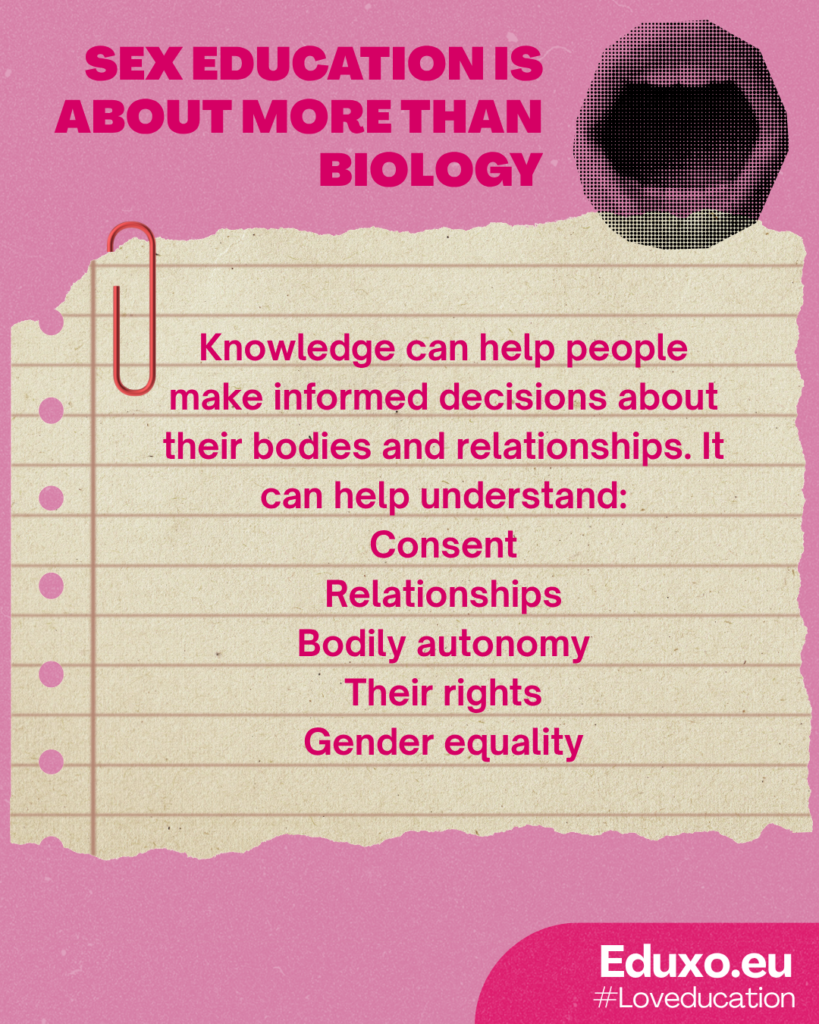
Comprehensive sexuality education goes beyond teaching biology or preventing sexually transmitted infections. It should include information on relationships, consent, contraception, bodily autonomy (the right to make decisions regarding one’s physical well-being, intimacy, etc.) Their rights, and their relationships with others.
However, access to this type of education varies by country. For example, in some countries, such as Poland and Hungary, sex education is more comprehensive, whereas in other countries it is optional, limited, or focused solely on risk prevention. This clearly shows that we do not all have the same opportunities to access reliable information on topics related to health, safety, and well-being.
Unequal Access to Accurate Information?
One of the major challenges is access to reliable information about sexual health. When sex education is limited, people especially young people may turn to social media and online forums to find answers to their questions. A recent European study showed that more than 65% of young Europeans between the ages of 15 and 24 use TikTok and/or Instagram as their primary source of information. While some of the information they find may be reliable, it can also expose them to misinformation.
Why Does It Matter? Rights, Autonomy, and Equality
Sex education isn’t just about providing information to young people. It can also help them understand their rights and feel more confident when making decisions about their bodies and relationships. For example, better understanding the concept of consent means realizing that you are free and always have a choice. Discussing gender equality helps break down stereotypes and toxic expectations within a relationship. Furthermore, a better understanding of sexual health encourages people to seek help from professionals. Better sex education can benefit everyone.
Collective and Inclusive Solutions
To improve access to sex education, society as a whole must take action. First, schools need access to reliable resources as well as tailored training—for example, through workshops on specific topics such as consent, as well as guides for addressing these subjects without taboos. Governments have a responsibility to ensure that every young person has access to education based on scientific evidence, regardless of where they live. Civil society organizations also have a key role to play in creating safe spaces where people can ask questions and learn without being judged.
Young people themselves must make their voices heard regarding the policies that primarily affect them. Their experiences help identify gaps in current systems and make educational resources more relevant and inclusive.
At the same time, the fight against misinformation must remain a top priority. Social media should not be young people’s primary source of information when it comes to understanding their bodies and their relationships.
Access to reliable information is an essential element of empowerment. People cannot participate in decisions that affect their lives and their communities if they are denied the knowledge necessary to understand the issues that concern them.
Sex education is not merely a health issue. It is closely linked to equal human rights and civic participation. Providing accurate information can help people make decisions, assert their rights, and engage with greater confidence in policy debates that shape the future. For organizations like Eduxo that work to strengthen youth participation and equality across Europe, sexual health education is an integral part of a broader debate on empowerment and inclusion.
World Sexual Health Day is an opportunity to move beyond the idea that sexual health is limited to disease prevention. It is also about having the knowledge, confidence, and freedom needed to make decisions about our bodies and our relationships.
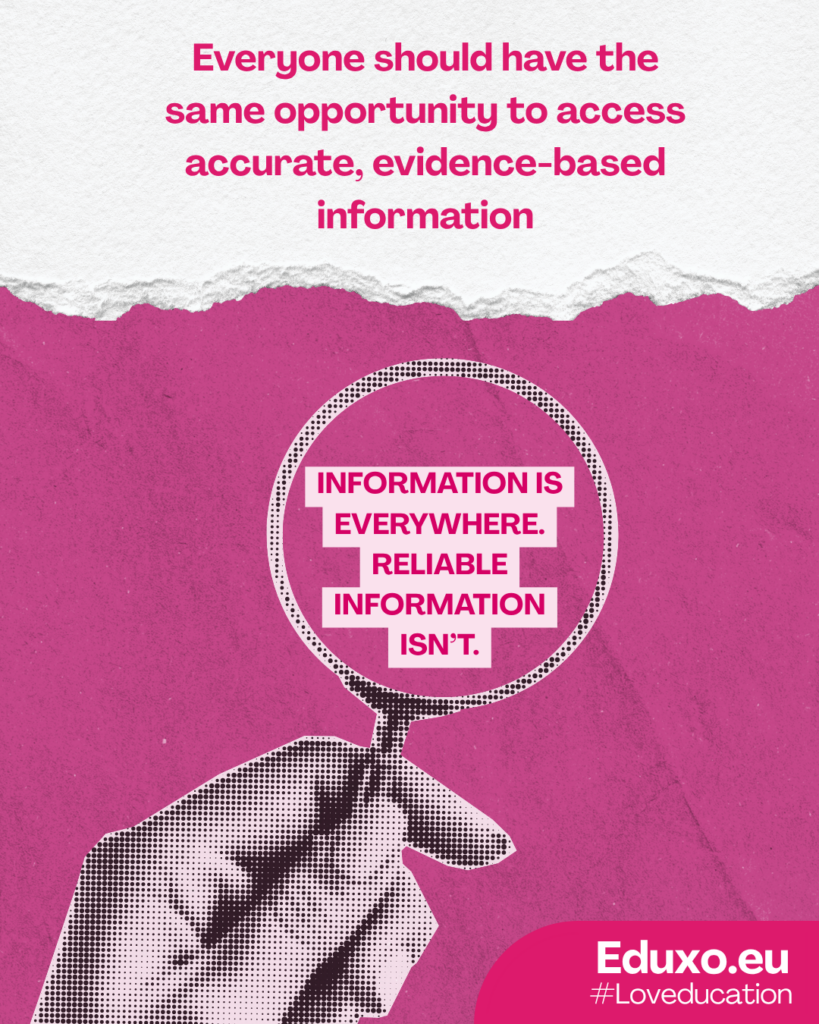
Everyone should have access to reliable information based on scientific evidence. Education cannot claim to solve all the challenges people face, but it can give them the tools to deal with them more confidently.